


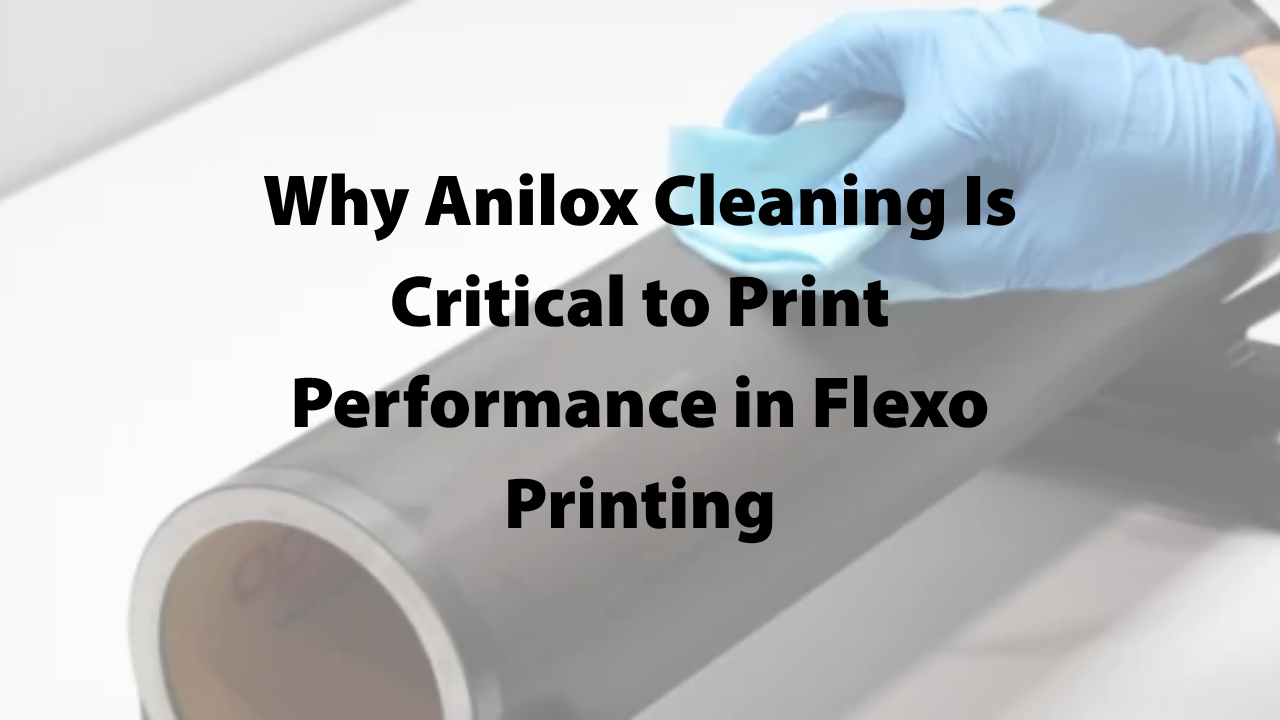
In flexographic printing, the anilox roll is the most critical component for controlling ink transfer and print consistency. Acting as a precision-engineered metering system, the anilox delivers a fixed and repeatable ink film thickness to the printing plate, typically measured in BCM (billion cubic microns) or cm³/m².
Because of this, the anilox roll is not just a component. It is a process-defining variable. Even minor inconsistencies in anilox performance can result in immediate and visible print quality defects.
The Hidden Impact of Anilox Cell Contamination
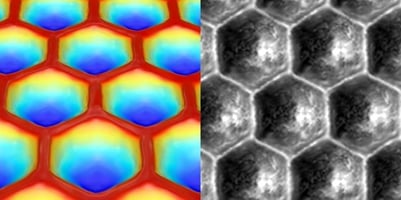 Modern laser-engraved anilox rolls are designed with highly controlled cell geometries, including:
- Line screen (LPI)
- Cell shape and structure
- Cell depth and wall thickness
- Ink volume capacity
These parameters are engineered to optimize ink release, film uniformity, and clean doctoring.
However, during standard print production, anilox cells can become contaminated with:
- Pigments (e.g., titanium dioxide)
- Ink binders and resins
- Dried ink residue
- Limescale and mineral buildup
- Metallic particles
- Dust and substrate debris
- Coatings and adhesives
This buildup leads to anilox cell plugging, which directly reduces effective ink volume and disrupts ink transfer performance.
How Dirty Anilox Rolls Cause Print Defects
When anilox cells become contaminated or restricted, the following flexo print issues occur:
- Reduced ink transfer efficiency and lower color density
- Inconsistent ink film thickness
- Increased print defects and variation
- Dot gain instability in halftone printing
- Higher ink costs due to recipe compensation
These issues not only affect print quality but also increase waste, downtime, and production costs.
Nominal Volume vs. Effective Volume in Anilox Rolls
A key concept in anilox performance is understanding the difference between:
- Nominal Volume – The engraved specification of the anilox
- Effective Volume – The actual usable ink volume during production
Contamination reduces effective volume without changing the engraved specification.
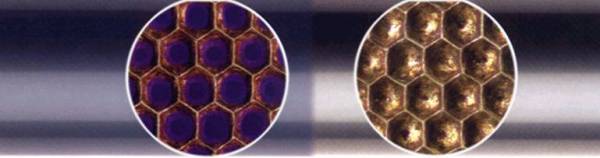 For example:
A 4.0 BCM anilox roll may perform like a 2.0 BCM roll if the cells are partially plugged.
Two identical anilox rolls can deliver completely different results based solely on cleanliness.
Operators often compensate by adjusting ink formulations or press settings, but this only masks the issue and increases costs.
Proper anilox cleaning restores performance at the source.
Measuring Anilox Condition for Optimal Performance
To maintain consistent print quality, objective measurement and inspection are essential.
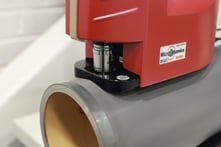 Key methods include:
- 3D cell volume measurement (microscopy or scanning systems)
- Optical density measurement (densitometer or spectrophotometer)
- Microscopic inspection for plugging or wear
Anilox Cleaning as a Critical Process Control Variable
Anilox cleaning should not be treated as routine maintenance. It is a core process control strategy in flexographic printing. Different contamination types require specific cleaning approaches:
- Ink and resin buildup → Alkaline cleaning solutions
- Coatings and adhesives → Solvent-based or specialty cleaners
- Limescale and mineral deposits → Acid-based descaling
- Heavy contamination → Ultrasonic cleaning, Heating tank systems, Sodium bicarbonate (NaHCO₃) blasting, Laser cleaning technology
Using the correct cleaning method ensures complete cell recovery without damaging the engraving.
Benefits of Proper Anilox Cleaning
 Implementing a consistent and effective anilox cleaning program delivers measurable results:
- Restored ink transfer efficiency
- Improved color strength and print consistency
- Reduced press downtime and waste
- Increased press stability and repeatability
- Higher overall equipment effectiveness (OEE)
Final Thought: Clean Anilox, Controlled Process
In flexographic printing, process control equals print consistency.
When anilox cells are contaminated, the printing process becomes reactive. Operators are forced to adjust ink, pressure, and settings to compensate for a variable that should be stable.
The reality is simple: The anilox roll does not just carry ink. It defines print performance.
 Keeping it clean is not simply maintenance. It is performance optimization.
Not sure if your anilox is performing as it should? Our team can help you measure, analyze, and restore your effective volume for consistent, repeatable results. Contact us today to get started.